

Hydraulic systems are used across manufacturing, construction, agriculture, and mobile equipment to control fluid flow and maintain pressure. Hydraulic barbed elbows are common fittings that connect hoses while allowing directional changes in tight or complex layouts.
Secure hose connections are essential for system safety and performance. Hydraulic barbed elbows are widely used because they provide reliable hose retention, flexible routing, and a cost-effective solution for low-to-medium pressure applications.
This guide explains what hydraulic barbed elbows are, how they work, their types and materials, common industrial uses, and best practices for selection and installation.
What Are Hydraulic Barbed Elbows?
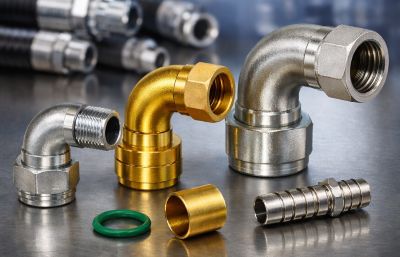
Hydraulic barbed elbows are fittings designed to connect hydraulic hoses while changing the direction of fluid flow. They combine a barbed hose connection with an angled elbow design, making them ideal for installations where straight fittings are impractical.
A hydraulic barbed elbow connects a flexible hose to another hose or to a port on hydraulic equipment. The barbed end grips the inside of the hose, while the elbow angle redirects the flow of hydraulic fluid.
Key Components
1. Barbed End: Features ridges (barbs) that grip the hose’s inner wall to prevent pull-out.
2. Elbow Angle: Most commonly 45° or 90°, allowing hoses to turn smoothly without kinking.
3. Threaded or Push-On Connection: The opposite end may be threaded (NPT, BSP) or designed for push-on hose connections.
Barbed Elbows vs. Straight Barbed Fittings
Unlike straight barbed fittings, barbed elbows allow directional changes. This reduces hose bending stress, improves routing flexibility, and helps maintain consistent fluid flow in confined spaces.
How Hydraulic Barbed Elbows Work
The effectiveness of hydraulic barbed elbows lies in their simple but robust design.
Hose Retention Through Barbs
The barbs dig slightly into the hose’s inner surface, creating a mechanical grip that resists pull-out under pressure.
Role of Hose Clamps or Crimping
In most applications, hose clamps or crimp sleeves are used to enhance retention and sealing. These components compress the hose around the barbs, preventing leaks and blow-off.
Fluid Flow and Pressure Management
The elbow shape redirects fluid flow while maintaining pressure integrity. Smooth internal passages help minimize turbulence and pressure drop.
Benefits in Tight Spaces
Angled connections make it easier to route hoses around obstacles, reduce sharp bends, and extend hose life in compact installations.
Common Materials Used in Hydraulic Barbed Elbows
Material choice plays a major role in performance, durability, and safety.
Carbon Steel
➡️ High strength and pressure capability
➡️ Often zinc-plated for corrosion resistance
➡️ Common in heavy-duty industrial systems
Stainless Steel
➡️ Excellent corrosion and chemical resistance
➡️ Ideal for harsh environments, food processing, or marine applications
Brass
➡️ Good corrosion resistance
➡️ Common in low-to-medium pressure systems and pneumatic applications
Aluminum
➡️ Lightweight and corrosion-resistant
➡️ Suitable for mobile or weight-sensitive equipment
Material Selection Considerations
1. Pressure requirements
2. Corrosion resistance
3. Operating temperature range
4. Compatibility with hydraulic fluids
Types of Hydraulic Barbed Elbows
Hydraulic barbed elbows come in various configurations to suit different system requirements.
By Angle
➡️ 45-Degree Barbed Elbows: Gentle directional change with reduced flow resistance
➡️ 90-Degree Barbed Elbows: Sharp turns for tight installations
By Connection Type
➡️ NPT Thread: Common in North American hydraulic systems
➡️ BSP Thread: Widely used in Europe and international markets
➡️ Push-On Barbed Elbows: Designed for quick installation without threading
By Barb Style
➡️ Single Barb: Suitable for lighter-duty or low-pressure applications
➡️ Multiple Barb Designs: Provide stronger hose retention and improved sealing
Industrial Applications of Hydraulic Barbed Elbows
Hydraulic barbed elbows are used across a wide range of industries, including:
1. Manufacturing equipment and automation systems
2. Construction and heavy machinery
3. Agricultural equipment and irrigation systems
4. Hydraulic power units
5. Automotive and mobile hydraulics
6. Pneumatic and low-to-medium pressure fluid systems
Their versatility makes them a go-to fitting for both permanent installations and maintenance repairs.
Advantages of Using Hydraulic Barbed Elbows
Here are the advantages of using hydraulic barbed elbows:
1. Secure Hose Retention: Barbed design minimizes hose slippage
2. Cost-Effective: Typically more affordable than complex fittings
3. Easy Installation: Simple tools and minimal setup required
4. Flexible Routing: Ideal for confined or complex layouts
5. Reduced Hose Stress: Angled routing prevents kinks and premature wear
How to Choose the Right Hydraulic Barbed Elbow
Selecting the correct fitting is critical for system reliability.
1. Match the hose inner diameter precisely
2. Confirm operating pressure and temperature ratings
3. Ensure compatibility with the hydraulic fluid
4. Choose appropriate material and surface coating
5. Consider environmental factors like corrosion, vibration, and exposure
Installation Best Practices
Proper installation ensures safety and longevity.
1. Clean and prepare both the hose and the fitting
2. Insert the hose fully onto the barbed end
3. Use the correct clamp or crimp method
4. Align fittings to avoid torsion or misalignment
5. Avoid common mistakes such as under-tightening or improper hose sizing
Maintenance and Inspection Tips
Regular inspection helps prevent failures.
1. Check for leaks or hose slippage
2. Look for corrosion, cracks, or worn barbs
3. Replace fittings at recommended intervals
4. Always depressurize systems before inspection for safety
Hydraulic Barbed Elbows vs. Other Hydraulic Fittings
Compared to Compression Fittings
Barbed elbows are easier to install and more flexible but generally handle lower pressures.
Compared to Flare Fittings
Flare fittings provide superior sealing at high pressures, while barbed elbows offer quicker installation and lower cost.
When Barbed Elbows Are the Better Choice
They are ideal for low-to-medium pressure systems, flexible hoses, and applications requiring easy maintenance.
Limitations
Not suitable for very high-pressure or critical sealing applications without proper clamps or crimps.
Frequently Asked Questions (FAQ)
Are hydraulic barbed elbows suitable for high-pressure systems?
They are generally used for low-to-medium pressure applications unless specifically rated and properly clamped.
Do barbed elbows require clamps?
In most cases, yes. Clamps or crimping improve sealing and hose retention.
Can barbed elbows be reused?
Reuse is possible if the fitting and hose are undamaged, but replacement is often recommended for safety.
How do I prevent hose blow-off?
Use the correct hose size, proper clamps or crimps, and ensure pressure ratings are not exceeded.
Conclusion
Hydraulic barbed elbows are essential components in many industrial hydraulic systems. Their simple design, flexible routing capabilities, and cost-effectiveness make them a popular choice for a wide range of applications. By understanding how they work, choosing the right material and type, and following proper installation and maintenance practices, industrial users can ensure safe, efficient, and long-lasting hydraulic connections.
Selecting the right hydraulic barbed elbow isn’t just about fit, it’s about performance, safety, and reliability. When chosen and installed correctly, these fittings play a crucial role in keeping industrial operations running smoothly.
Post time: Jan-02-2026